
Climate and Nature Board Governance Report
The World Economic Forum (WEF) releases climate and nature board governance report, aiming to provide a framework for the board to incorporate climate and nature factors.
The World Economic Forum believes that climate change and natural resources will continue to affect corporate competitiveness in the coming decades, so the board of directors needs to conduct long-term outlook through scenario analysis and communicate deeply with stakeholders.
Related Post: Hong Kong Monetary Authority Releases Climate-related Risk Governance Report
Background of Climate and Nature Board Governance
Climate and natural pressures are exacerbating the complexity of the markets, supply chains, and communities in which businesses operate, and boards of directors need to act in these uncertain environments to enhance business resilience. Climate change risks, such as physical climate events and low-carbon economic transition, can affect business operations and investments. Natural risks, such as resource scarcity and supply chain endpoints, can also have negative impacts. The correlation between climate and nature is close, and climate change is the main factor causing ecosystem loss. Ecosystems play an important role in carbon storage and mitigating climate impacts. For the board of directors, climate and nature need to be considered together.
The impact of climate and nature related risks and opportunities vary across different industries. Taking the financial industry as an example, climate change and natural losses are important financial risks that spread through credit, market, and operational channels, leading to defaults, volatility, and systemic risks. Incorporating climate and natural factors into strategies, risk management, and product design can enhance resilience. Developing green finance and investing in natural infrastructure can protect the long-term value of assets.
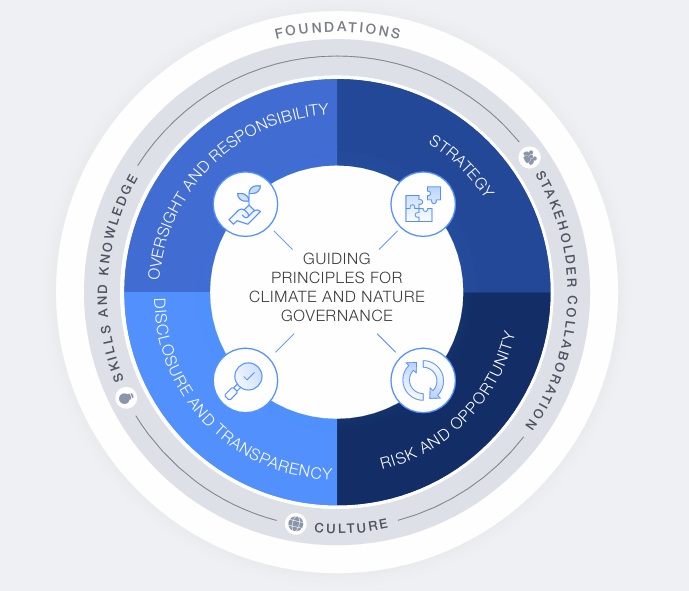
Climate and Nature Board Governance Foundations
The foundation of climate and nature board governance includes:
- Skills and knowledge: The board of directors possesses relevant skills and knowledge to understand the impacts, risks, and opportunities of climate and nature.
- Stakeholder collaboration: The board of directors is responsible for coordinating stakeholder collaboration and creating solutions together with regulatory agencies, investors, upstream and downstream companies in the supply chain, and communities.
- Culture: The board of directors shapes the corporate culture to enhance the company’s drive for strategic and long-term value creation.
Climate and Nature Board Governance Principles
The principles of governance by the Climate and Nature Board include:
- Oversight and responsibility: The board of directors is responsible for promoting long-term resilience and value creation, understanding the impact of climate and nature on businesses.
- Strategy: The board of directors is responsible for incorporating risks and opportunities into corporate strategy and policy development, incorporating climate and nature related factors into decision-making processes, and driving long-term value creation.
- Risk and opportunity: The board of directors is responsible for overseeing climate and natural risks, opportunities, and dependencies to protect and enhance stakeholder value.
- Disclosure and transparency: The board of directors needs to promote transparency, integrity, and accountability in information disclosure, ensuring true and fair disclosure of how climate and nature affect financial performance and long-term development.
Reference:
Board Leadership for Growth and Resilience: Guiding Principles for Climate and Nature Governance