
Enterprise and Biodiversity Assessment Report
The Intergovernmental Science Policy Platform on Biodiversity and Ecosystem Services (IPBES) releases an assessment report on enterprises and biodiversity, aimed at measuring the mutual impact between enterprises and biodiversity.
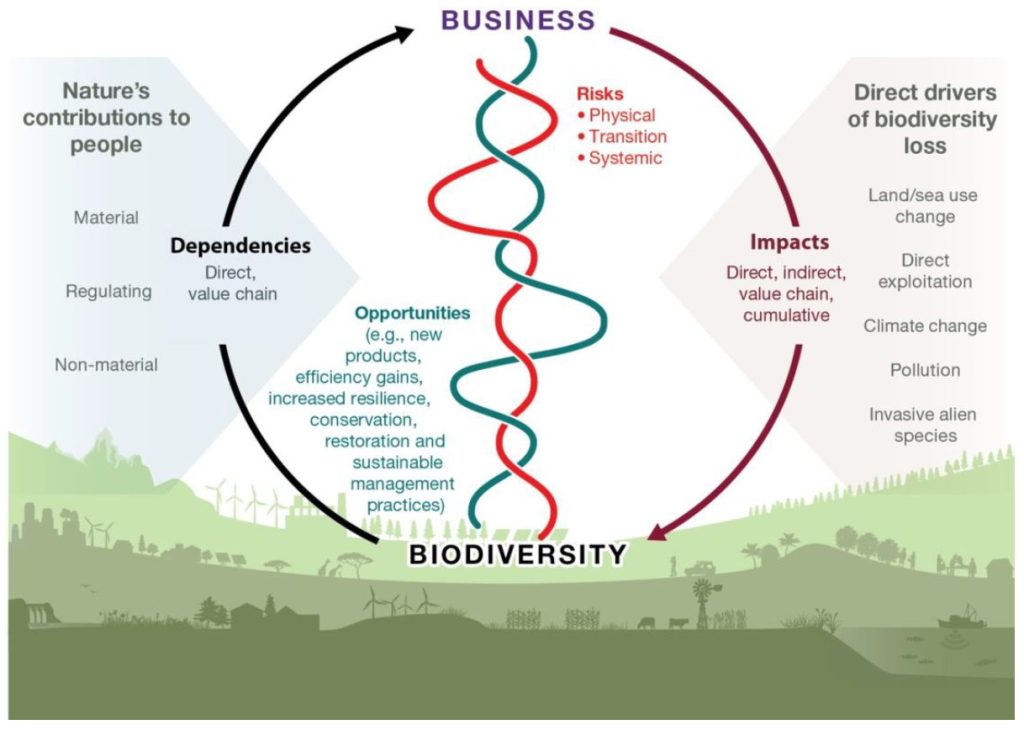
IPBES believes that the rate of global biodiversity loss is accelerating, and enterprises are not only the main driving force behind biodiversity loss, but also an important force in promoting the implementation of the Global Biodiversity Framework (GBF).
Related Post: Goldman Sachs Releases Artificial Intelligence and Biodiversity Measurement Report
Relationship between Enterprise and Biodiversity
This report suggests that the relationship between enterprises and biodiversity can be summarized as follows:
- All enterprises are potential drivers of biodiversity change. Biodiversity and the contribution of nature to humanity support the functioning of the economic system, therefore all enterprises rely directly or indirectly on biodiversity. Enterprises can quickly act with appropriate incentives, information, and capabilities. However, current enterprises are often affected by factors such as scale, industry, and structure, making it difficult for them to recognize their dependence on biodiversity and the impact it has on biodiversity.
- Insufficient and misplaced incentives are the main reasons affecting enterprises. On the one hand, companies lack sufficient incentives to take actions that are beneficial to biodiversity. On the other hand, improper subsidies can encourage companies to engage in behaviors that harm biodiversity. The global funding scale for direct negative impacts on nature in 2023 is $7.3 trillion, while the funding for biodiversity conservation is only $220 billion. This gap highlights the urgent need to guide funding towards positive activities related to biodiversity.
- Creating an environment conducive to biodiversity requires collaboration among participants. Policies and regulations, economic and financial aspects, social values, technological capabilities, etc. require cooperation among government, financial institutions, enterprises, and communities to form a positive impact on biodiversity and fundamentally change the current incentive structure.
How can Companies Measure Biodiversity
The report suggests that companies can adopt the following methods to measure the impact and dependence on biodiversity:
- Location observation: By conducting on-site observations and remote sensing at specific locations, high-precision local data is obtained for decision-making at the operational level.
- Collaborative monitoring: Collaborate with local external stakeholders, utilize local knowledge, and carry out monitoring and mapping work.
- Spatial analysis: Use spatial data layer overlay, ecological modeling, and other methods to evaluate the cumulative impact on biodiversity.
- Lifecycle approach: Conduct full lifecycle assessment and environmental footprint analysis to evaluate the impact at the value chain level.
- Macro environmental model: Use qualitative and quantitative methods to screen and compare investment portfolios.
The report suggests that current methods for measuring biodiversity have some limitations, such as insufficient spatial data resolution, difficulty in quantifying natural contributions, and insufficient local knowledge systems. In addition to enterprises, market participants can construct an action framework conducive to biodiversity measurement from the following dimensions:
- Policies and laws: Develop and implement biodiversity policies, increase disclosure requirements, and incorporate biodiversity into prudent frameworks.
- Economy and finance: Increase positive biodiversity incentives, develop tools such as green bonds and biodiversity credits.
- Technology and data: Use new technologies such as AI to collect robust biodiversity data and promote open sharing of data.
- Ability and knowledge: Utilize the geographical knowledge of the local community to carry out education and training projects.
Reference: