Sustainable Panda Bond and Dim Sum Bond Report
Climate Bonds Initiative (CBI) releases sustainable panda bond and Dim Sum bond report, aiming to summarize the development of sustainable bonds denominated in RMB.
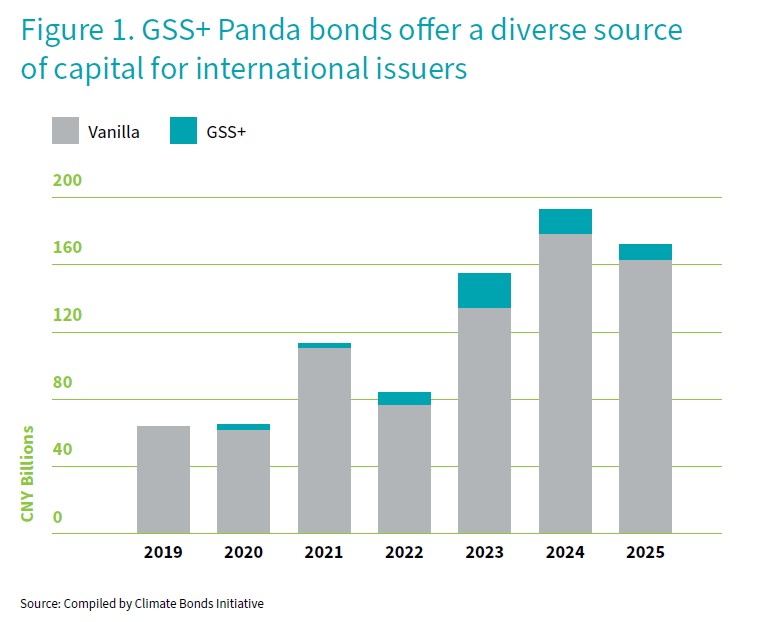
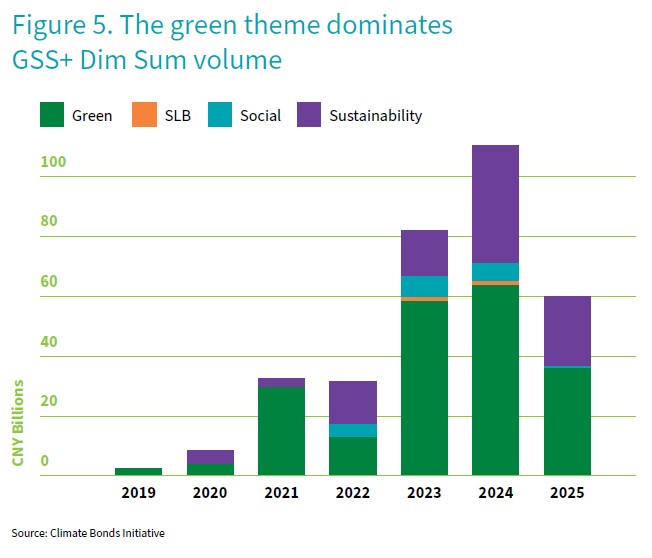
By the end of 2025, the issuance scale of sustainable panda bonds will reach 64.2 billion yuan, and the issuance scale of sustainable Dim Sum bonds will reach 328 billion yuan. Green bonds account for the highest proportion of the two, about 60%.
Related Post: Climate Bond Initiative Releases 2025 Global Sustainable Bond Market Report
Sustainable Panda Bond Market Development
In 2016, New Development Bank issued its first 3-billion-yuan green panda bond, with a peak issuance of 19.7 billion yuan in 2023 and a total issuance of 9.2 billion yuan in 2025. This growth is attributed to lower onshore market interest rates compared to the US dollar market, clear policy support, and increased market preference for sustainable bond structures. By the end of 2025, sustainable panda bonds will account for 6% of the total issuance of panda bonds.
Green bonds dominate in sustainable panda bonds, followed by sustainable bonds (31%). In terms of themes, renewable energy (33%), waste management (20%), and low-carbon transportation (16%) are the main funding uses. In terms of issuers, non-financial enterprises (55%) and development banks (30%) account for a relatively high proportion. Compared with Dim Sum bonds, Panda bonds have higher requirements on the issuer’s operational reserves. The issuer usually chooses bonds with shorter maturities, and investors also prefer to establish short-term investment exposure.
Sustainable Dim Sum Bond Market Development
Sustainable Dim Sum bonds were first issued in 2019 in Hong Kong. Hong Kong is the largest sustainable bond issuance center in Asia, providing significant advantages for investors seeking offshore RMB financing. By the end of 2025, the cumulative issuance of sustainable Dim Sum bonds was RMB 328 billion, exceeding the sustainable panda bonds. More international investors participate in the sustainable bond market, and its legal arrangements, document structure and operation mode are more suitable for the needs of bond issuers.
Renewable energy (22%) and low-carbon transportation (20%) are the main capital uses of the sustainable bond market. The term of sustainable bond is also short, and 76% of the issuance is concentrated in less than five years. Since 2024, there have been some long-term bonds in the market, but the issuance of green infrastructure and transition assets is limited. From the analysis of interest rate data, the pricing of sustainable bond can compete with other emerging markets, and some issuers can provide lower interest rates than sustainable Panda bond.
How to Promote Sustainable Panda Bond and Dim Sum Bond
Both the sustainable panda bond market and the Dim Sim bond market are facing challenges such as information disclosure, regulatory interpretation and sustainable taxonomy. Therefore, the market needs clearer rules, interoperability consistent with international standards, and a stronger credit enhancement mechanism.
In the sustainable panda bond market, the National Association of Financial Market Institutional Investors released the Panda Bond Manual and launched a sustainable bond pilot project for overseas institutions. In the sustainable bond market, the Hong Kong Monetary Authority (HKMA) launched the Hong Kong Sustainable Finance Taxonomy, which is consistent with international standards such as the EU Taxonomy, and provides support for issuers and investors to evaluate and analyze sustainable bonds.
Reference: