2026 Sustainable Aviation Outlook Report
The World Economic Forum (WEF) releases 2026 Sustainable Aviation Outlook report, which aims to summarize the progress of global sustainable aviation technology and policies, as well as decarbonization plans for 2026.
In 2025, the global aviation industry faces challenges in terms of fuel prices, policy stability, and trade dynamics. The aviation industry needs a more pragmatic, economically feasible, and resilient decarbonization path.
Related Post: World Economic Forum Releases 2025 Report on Sustainable Aviation Outlook
Global Sustainable Aviation Progress
The global progress of sustainable aviation in 2025 is as follows:
- Sustainable aviation fuel: By 2025, the global production of sustainable aviation fuel reaches 1.9 million tons, doubling from 2024 and accounting for 0.6% of the total consumption of aviation fuel. In January 2025, the European Union and the United Kingdom officially implemented mandatory requirements for the addition of sustainable aviation fuel, accounting for 2% of the total fuel.
- Sustainable infrastructure: For the first time, multiple airports around the world have adopted sustainable aviation fuels and established separate blending facilities to reduce the entry costs for producers. Some airports have launched pilot projects for hydrogen powered vehicles to increase operational experience.
- Sustainable digital technology: Airlines are utilizing digital technology to optimize flight paths, reduce fuel consumption, and indirectly reduce carbon emissions by improving booking and operational efficiency.
Global Sustainable Aviation Challenge
Although sustainable aviation is making progress, there are still some factors that pose challenges:
- Technical cost and economic scale: Despite the increase in production of sustainable aviation fuel, its price is still more than twice that of traditional fuel, and this green premium will inhibit its widespread application. Some capital-intensive aviation fuel production projects are greatly affected by fluctuations in raw material prices and long-term purchase agreements, resulting in high investment risks.
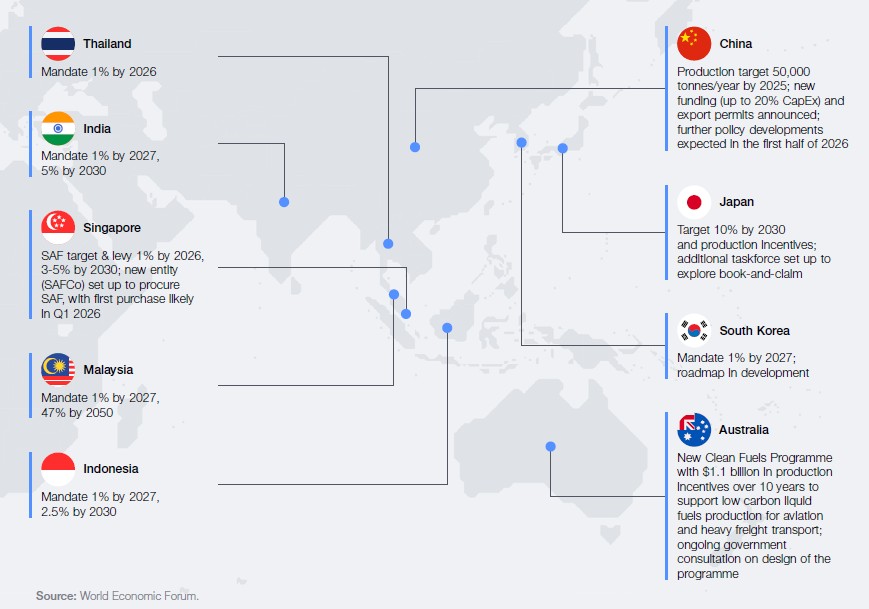
- Policy changes and supply chain disruptions: There are differences in goals, timelines, and sustainability standards among countries’ sustainable aviation plans, which increases the complexity of cross-border operations. Trade policies of various countries can also affect supply chains, thereby impacting industry production.
- Business growth and carbon emission pressure: Global air passenger volume is expected to reach a new high of 10.2 billion by 2026. The delivery speed of sustainable aircraft and engines needs to meet market growth demands.
How to Promote Sustainable Aviation Development
The World Economic Forum believes that the following measures can promote sustainable aviation development:
- Build a collaborative and stable policy system: Establish a consistent definition of sustainable aviation fuel, introducing sustainable rating labels, and promoting alignment between aviation policies and global sustainability standards. Reduce sustainable investment risks in the aviation industry and provide incentive mechanisms.
- Strengthen technological innovation and industrial construction: While supporting mature sustainable aviation fuel technologies, promote the construction of clean energy (green electricity, green hydrogen energy), and build a carbon footprint database for the entire lifecycle.
- Promote global cooperation and partnerships: Encourage aviation industry participants to sign long-term agreements and create sustained sustainable demand. Promote green aviation to the market and enhance public awareness of sustainability.
Reference: