
2026 Global Electricity Report
The International Energy Agency (IEA) releases 2026 Global Electricity Report, which aims to summarize the progress of the global electricity industry and focus on the development of low-carbon power generation and renewable energy electricity.
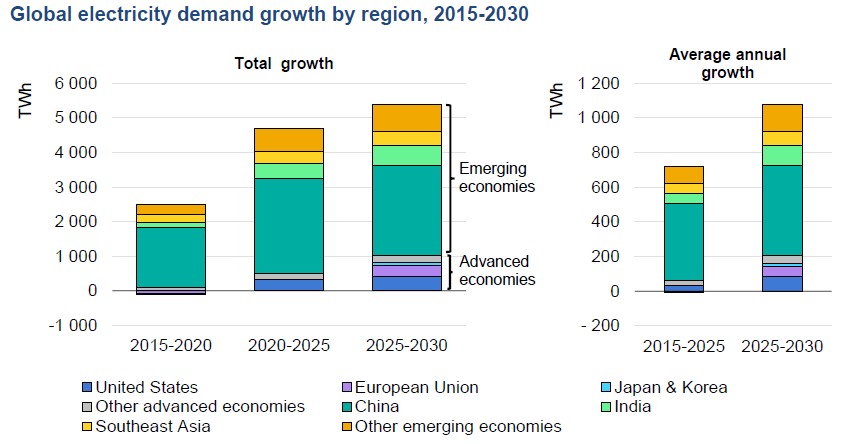
The International Energy Agency believes that the accelerated electrification process in the industrial, transportation, and construction sectors, as well as the driving force of high energy consuming industries such as artificial intelligence and data centers, have led to sustained growth in global electricity demand.
Related Post: International Energy Agency Releases 2025 Renewable Energy Report
Global Electricity Demand and Supply
Global electricity demand is expected to grow at an annual rate of 3.4% between 2026 and 2030, but the growth rate of carbon emissions in the power sector will decrease. By 2025, the global carbon emissions from electricity are approximately 13.9 billion tons, accounting for 40% of the total global energy related to carbon emissions. Although the demand for electricity will continue to grow in the next five years, with an expected annual average carbon emissions of -0.2%, this indicates that changes in the power supply structure are restraining the growth of carbon emissions, and the core driving force behind this change is the decrease in carbon intensity of power generation.
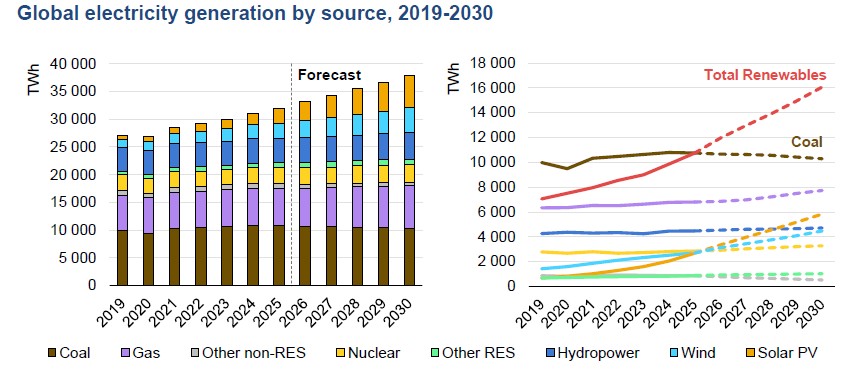
In 2025, the global carbon intensity of electricity is 435 grams per kilowatt hour, a decrease of 14% compared to ten years ago. It is expected that the average annual decline rate in the next five years will be 3.7%. By 2030, the global carbon intensity of electricity will be about 360 grams per kilowatt hour. The global power supply has undergone a structural transformation, and by 2025, renewable energy generation will be like coal power generation. Renewable energy and low-carbon energy such as nuclear energy can currently meet 42% of the world’s electricity demand, and it is expected that this proportion will increase to 50% by 2030.
From 2026 to 2030, renewable energy generation is expected to grow at an average annual rate of 8.4%, with photovoltaic power experiencing the fastest growth, increasing by 40% year-on-year in 2025. In 2026, photovoltaic power generation will exceed wind and nuclear power, and in 2029, photovoltaic power generation will exceed hydropower. The average annual growth rate of nuclear power from 2026 to 2030 is 2.8%, which is more than twice that of the past five years.
The International Energy Agency analyzes the electricity demand and supply situation in different regions:
- China: China is the world’s largest electricity market, with photovoltaic and wind power accounting for 22% of total electricity generation in 2025. It is expected that the average annual growth rate of electricity demand in the future will be 4.9%, with renewable energy generation growing at an average annual rate of 8.8% and nuclear power generation growing at an average annual rate of 5.9%. The carbon emission intensity will decrease from 530 grams per kilowatt hour to 415 grams per kilowatt hour.
- EU: Photovoltaic and wind power will account for 48% of the total electricity generation in the EU by 2025, and it is expected that the share of renewable energy will continue to increase to 63% by 2030, with carpet power accounting for 84%. The carbon emission intensity has decreased by an average of 11% annually, from 170 grams per kilowatt hour to 90 grams per kilowatt hour.
- The United States: Electricity demand is expected to grow at an average annual rate of 2%, photovoltaic share will increase from 7% in 2025 to 11% in 2030, the total share of renewable energy will reach 29%, and carbon emission intensity will decrease at an average annual rate of 3.2%.
How to Promote Global Electricity Development
The International Energy Agency believes that grid infrastructure has become a potential challenge for the development of the power industry. Currently, over 2500GW of renewable energy projects worldwide are hindered by grid connection queues, and the planning, licensing, and construction cycles of grid projects are much longer than those of power generation projects, resulting in investment mismatches. Due to insufficient power grid supply, the abandonment rate of renewable energy is on the rise in many regions.
Global power grid investment needs to increase by 50% annually from the current $400 billion by 2030. In addition to grid infrastructure, renewable energy generation systems need to match flexible electricity demand, such as improving power peak shaving capabilities and ramp up rates, developing energy storage systems, and adopting dynamic line rating and grid enhancement technologies. These measures can ensure the safe, reliable, and economical operation of renewable energy systems.
Reference: