
Report on the Economic and Financial Impact of Extreme Weather Events
The Network for Greening the Financial System (NGFS) releases a report on the economic and financial impacts of extreme weather events, aiming to summarize the transmission mechanisms and effects of extreme weather events.
The NGFS believes that the frequency and intensity of extreme weather events continue to rise, causing direct losses of over $200 billion annually worldwide.
Related Post: CDP Releases Extreme Weather Risks Impact Report
Extreme Weather Events Transmission Models
The impact of extreme weather events is determined by three interrelated dimensions:
- Physical hazards: Intensity of extreme weather events themselves, such as storm levels and wildfire ranges.
- Exposure level: Assets such as personnel and infrastructure in the disaster-prone area.
- Vulnerability: The sensitivity of assets to damage depends on building quality, protective measures, etc.
Due to the differences in the above dimensions, similar extreme weather events have different impacts on different economies. In the short term, physical assets can be directly destroyed, interrupting economic activities. In the long run, it may lead to long-term loss of human capital and have a sustained impact on economic output. The transmission model of extreme weather events includes the following channels:
- Supply side channel: The supply side is the most common transmission channel, and extreme weather events can damage productive assets, weaken current and future production capacity, and affect transportation networks, leading to a reduction in labor attacks. These impacts will reduce total productivity, increase transaction costs, and lower operational efficiency.
- Demand side channels: The demand side includes income, wealth, and confidence channels. Asset impairment can reduce household and business income, inhibit subsequent consumption and investment, and may also increase uncertainty about future income, leading to an increase in precautionary savings.
- Spillover effect: The impact of extreme weather events can spread across different economies through the supply chain, affecting supply and demand in other regions in the event of production, logistics, and trade disruptions.
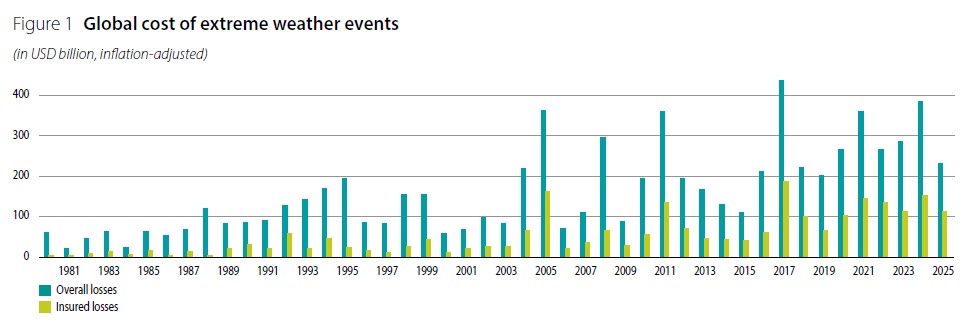
Economic and Financial Impact of Extreme Weather Events
The economic and financial impact of extreme weather events include:
- Economic and inflation risks: Extreme weather may lead to a decrease in economic growth expectations and may affect raw material production, resulting in increased inflation risks.
- Credit risk: Extreme weather events can directly affect the balance sheets of financial institutions, with a decrease in collateral value being a significant factor. For example, floods causing damage to residential and commercial real estate, resulting in a decrease in the value of credit collateral.
- Liquidity risk: Extreme weather events may result in payment delays or cash flow termination, causing temporary liquidity pressure on financial institutions. Although insurance can play a role in addressing liquidity risk, the coverage gap remains significant.
The NGFS believes that central banks need to incorporate the economic and financial impacts of extreme weather into their monetary policy framework and take a series of measures to address extreme weather risks:
- Incorporate extreme weather risks as an emerging risk type into regulatory practices.
- Incorporate disaster effects into economic growth and inflation assessments.
- Provide temporary regulatory flexibility to respond to changes in credit and liquidity in disaster areas.
- Adopt a targeted combination of monetary and fiscal policies to cope with price fluctuations.
Reference:
NGFS Note on the Economic and Financial Impacts of Extreme Weather Events