2026 Global Carbon Pricing Report
The World Bank releases 2026 Global Carbon Pricing Report, aimed at summarizing the development of global carbon pricing mechanisms.
As of April 2026, 87 carbon pricing mechanisms have been implemented globally, covering approximately 29% of greenhouse gas emissions.
Related Post: World Bank Releases 2025 Global Carbon Credit Price Report
Global Carbon Pricing Mechanism Development
The World Bank believes that the global carbon pricing system continues to expand, and in the past year, five countries including India, Japan, Vietnam, Mauritania, and Serbia have implemented national level carbon pricing mechanisms. For example, India has launched a carbon credit trading program covering eight carbon intensive industries, while Japan has launched a mandatory carbon trading program covering 50% of greenhouse gas emissions.
From the perspective of carbon pricing categories, the development speed of the carbon emissions trading system is faster than that of the carbon tax. Since 2016, the greenhouse gas emissions covered by the carbon emissions trading system have increased from 8% to 26%, while the coverage of the carbon tax has remained stable at 4% to 5%. With the implementation of carbon pricing tools in Brazil, Turkey and Malaysia in the next few years, the total coverage of global carbon pricing tools will reach one third by 2030.
Global Carbon Pricing Prices Changes
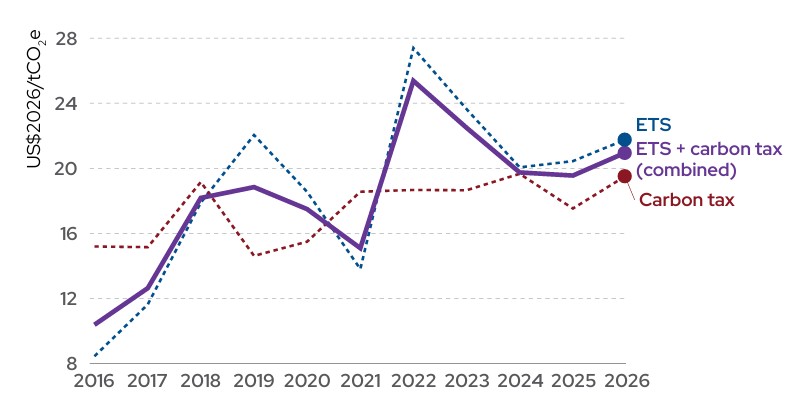
From the perspective of price trends, the average global carbon pricing price has increased by 7% in the past year, reaching $21 per ton of carbon dioxide. Compared to 2016, the average price has doubled. The price difference is very significant in different regions and countries, for example, the average price of 30 carbon pricing mechanisms in Europe is $68, the average price of carbon pricing mechanisms in North America is $43, and the average price in Asia is $11. Low – and middle-income countries have lower carbon pricing, and many rely on free quota distribution, accounting for 70% of carbon emissions, but generating only 1% of global carbon pricing revenue.
The total revenue generated by global carbon pricing in 2025 reached 107 billion US dollars, an increase of 2% compared to 2024, with the carbon emissions trading system contributing 70% of the revenue and carbon tax revenue decreasing by 20% year-on-year. These revenues are mainly invested in the field of green transition, for example, the European Union will launch the Social Climate Fund this year to support the energy transformation of households and businesses.
Global Carbon Credit Market Development
By 2025, the global issuance of carbon credit increased by 8% year-on-year, reaching 432 million tons. The 2025 takeoff agreement will purchase 158 million tons of carbon credits in the future, with a total value of $12 billion, a threefold increase compared to 2024. This indicates that carbon credit buyers are locking in high-quality carbon credit supply for the future, especially carbon removal projects, by providing early funding. The prices of these contracts are much higher than the current carbon prices, such as the forward price of Direct Air Capture projects ranging from $400 to $600 per ton of carbon dioxide.
High quality carbon credits, such as those eligible for international aviation carbon offset and reduction programs, trade at a price of $15 to $22 per ton, higher than most projects’ $1 to $14 per ton. The impact of third-party ratings on carbon credit prices is also more evident, for example, in Afforestation, Reforestation and Vegetation Restoration projects, the carbon price of high rated projects is about $30 per ton, and the carbon price of low rated projects is about $9 per ton. For every category increase in project rating, carbon prices will increase by 87%. Carbon credit labels also have a similar effect, with the Core Carbon Principles label from the Integrity Council for the Voluntary Carbon Market bringing an average premium of 25% to projects.
Reference: