
Clean Fuel Market Report
The World Economic Forum (WEF) releases a report on the clean fuel market, aimed at introducing the market landscape of clean fuels and proposing recommendations to accelerate industry development.
The World Economic Forum believes that clean fuels, as part of a safe, economical, and sustainable energy system, can provide multiple economic and social values. However, expanding the clean fuel industry still faces challenges in terms of resources, business, and policies.
Related Post: International Energy Agency Releases Emerging Market Clean Energy Report
What is Clean Fuel
Clean fuels refer to liquid biofuels, biogas, low-carbon fossil fuels, synthetic fuels, and other hydrogen derivatives, which are key tools for reducing carbon emissions in industries closely dependent on fuels such as transportation and industry. The energy density, storage characteristics, chemical properties, and infrastructure compatibility of clean fuels make them highly competitive choices. These fuels come from biomass, renewable energy, or fossil fuels, and are converted into gaseous or liquid fuels through various biological technology processes, such as bioethanol, biodiesel, biomethane, green ammonia, and low-carbon aviation fuels.
In the current situation, the production cost of clean fuels is higher than that of traditional fossil fuels, but they have advantages in energy security and environmental benefits. Clean fuels can improve energy self-sufficiency and reduce dependence on external energy supply chains by producing raw materials such as organic waste and agricultural residues. Clean fuels can create more job opportunities, for example, investing $1 million can create 10 to 30 clean fuel industry jobs, while traditional fuel industries can create 5 to 10 job opportunities. In addition, clean fuels are sustainable in the long run, with an annual reduction of 1 billion to 2.5 billion tons of carbon emissions by 2050. With the application of carbon capture technology, clean fuels can reduce carbon emissions by more than 90%.
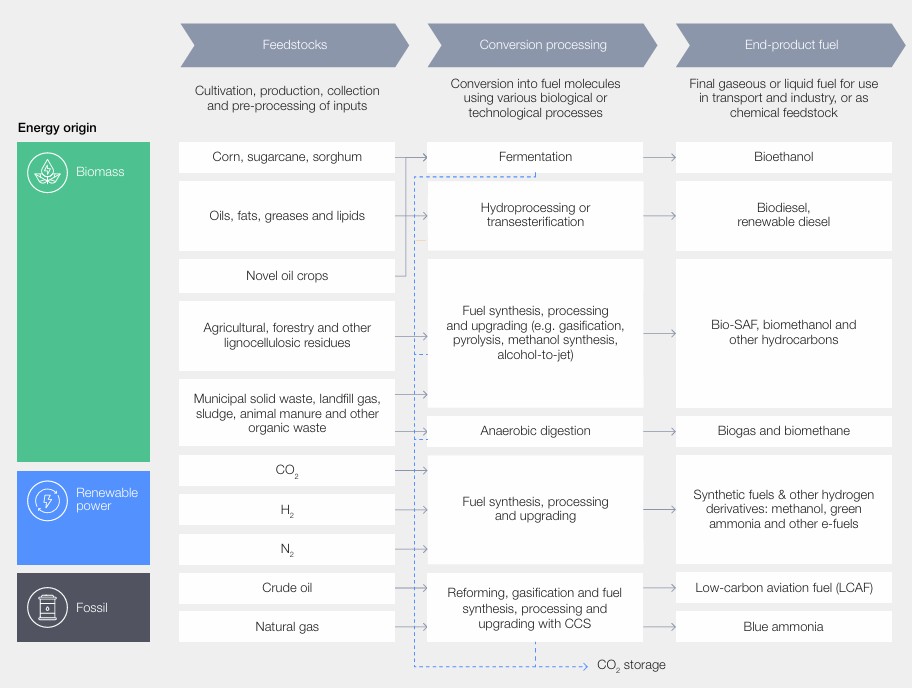
Global Clean Fuel Market Development
The World Economic Forum analyzes the development of the global clean fuel market from the following perspectives:
- Demand: The annual supply of clean fuels in the global market is 7 exajoules, accounting for 1.3% of global energy consumption, mainly consisting of bioethanol, biodiesel, and biogas. 80% of clean fuels are used in industries such as aviation, shipping, and road transportation. The global demand for clean fuels may increase by 2 to 3.5 times by 2040, driven by short-term factors such as road transportation and long-term factors such as aviation, shipping, and industry.
- Sustainability: Most clean fuels can reduce carbon emissions by 50%, and the actual carbon reduction effect depends on factors such as raw material type, energy input, and conversion efficiency. Clean fuels can be combined with carbon capture technology to reduce carbon emissions throughout the entire supply chain. In addition to carbon emissions, the impact of clean fuels on water and land resources also needs to be considered.
- Competitiveness: Factors such as raw materials, technology, and markets often result in cleaner fuels being more expensive than fossil fuels, and this characteristic will not change in the short and medium term. Some mature biofuels, such as biodiesel and renewable diesel, have costs comparable to diesel prices in certain regions. In the future, the clean fuel industry still needs to improve process efficiency and reduce financing costs to participate in market competition with the advantage of carbon emission reduction.
- Scalability: Most clean fuels can be mixed or directly replaced with existing fuels, while a few clean fuels used for shipping require infrastructure upgrades. Various types of clean fuels face different constraints, such as biodiesel and bioethanol, which can already be deployed on a large scale. There is a supply chain gap for clean hydrogen energy, and sustainable bio aviation fuel needs to continue to improve in terms of technology.
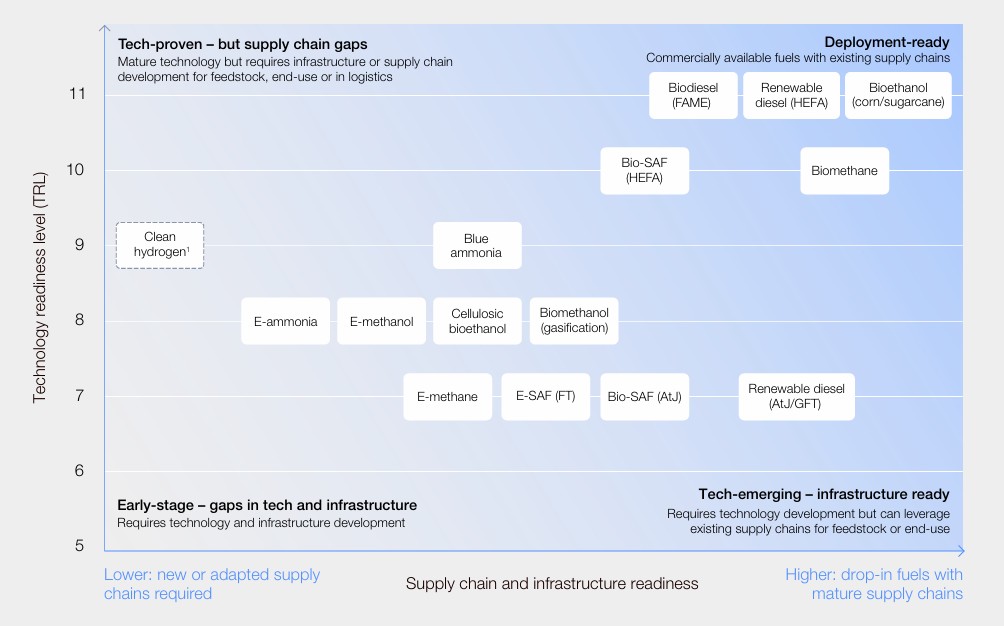
How to Promote Clean Fuel Market Development
By the end of 2025, the global investment in clean fuels reaches 25 billion US dollars, a year-on-year increase of 30%, but still lower than market demand. The investment scale for clean fuels needs to reach 100 billion US dollars by 2030, which is four times the current amount. The obstacles to the development of clean fuels include:
- Project: Early technological risks result in high initial costs, making it difficult to transition from venture capital to infrastructure.
- Supply chain: Unstable supply of raw materials, scattered production and logistics links, leading to time mismatches.
- Policy: Different definitions and certification standards lead to weak interoperability between markets.
The World Economic Forum believes that the following measures can promote the development of the clean fuel industry:
- Industry policy: The clean fuel industry requires a longer time frame, more predictable, and performance-oriented framework to convert its economic, environmental, and social values into price signals. Countries can also use consistent standards to promote trade activities.
- Public private partnership: The public sector can provide support for early clean energy projects, such as providing venture capital or building infrastructure, to reduce investment risks for the private sector and encourage investment.
- Business measures: Enterprises can establish cooperative relationships with other enterprises in the value chain, innovate clean fuel production paths, and reduce the risks of independent research and investment.
Reference:
Fueling the Future: How Business, Finance and Policy can Accelerate the Clean Fuels Market