Asset Owners Sustainable Investment Report
The Asia Securities Industry and Financial Markets Association (ASIFMA) releases asset owners sustainable investment report, aimed at summarizing the development of sustainable investment.
This report covers 55 sovereign wealth funds, pension funds, and insurance companies with AUM exceeding $4.9 trillion.
Related Post: ASIFMA Releases Sustainability Guidelines for Asset Management Industry
Asset Owners Sustainable Investment Attitude
85% of asset owners have a very positive attitude towards sustainable investment, with only 2% holding a negative view. The respondents believe that sustainable investment requires continuous attention from both risk and opportunity perspectives, and global and local regulatory policies have also enhanced their confidence. More than 70% of respondents believe that ESG factors are very important in sustainable investment methods.
All asset owners believe that their focus on sustainable investment will continue or increase in the next one to two years, with nearly half planning to strengthen ESG integration and incorporate ESG factors into more investment teams and asset classes. Some respondents have incorporated key performance indicators related to sustainable investment into senior management compensation, ensuring long-term commitment through governance mechanisms. 33% of respondents plan to increase sustainable funding allocation.
Asset Owners Sustainable Investment Methods
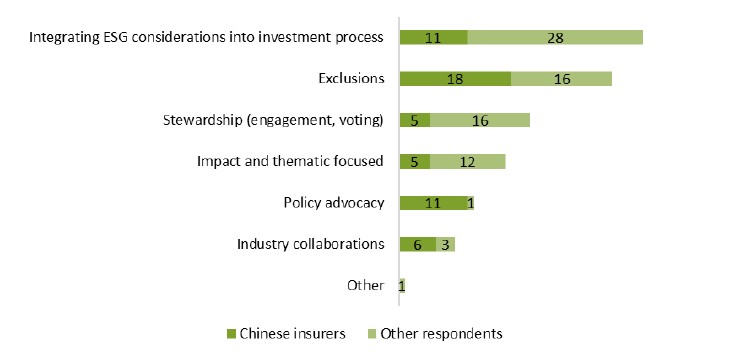
The most sustainable investment methods used by asset owners include:
- ESG integration (75%): Systematically incorporating ESG factors into the entire investment process (asset allocation, target selection, and risk management), some respondents consider the ESG integration capabilities of asset managers when entrusting assets.
- Exclusion (65%): Negative screening eliminates certain industries or invested companies, which is mainly used by respondents in the early stages of sustainable investment.
- Engagement (40%): Influencing the decisions of the investees by exercising shareholder rights. Some respondents conveyed this requirement to external asset managers.
Asset owners believe that the challenges faced by sustainable investments include:
- Limited investment opportunities: Investment targets that meet the risk return requirements of the respondents and meet sustainable standards are scarce. Some respondents mentioned that although investments are financially feasible, they may be abandoned due to the inability to meet sustainable standards.
- Insufficient ESG data: There are challenges in the availability, comparability, and quality of ESG data, and typically only large companies can obtain comprehensive ESG external data.
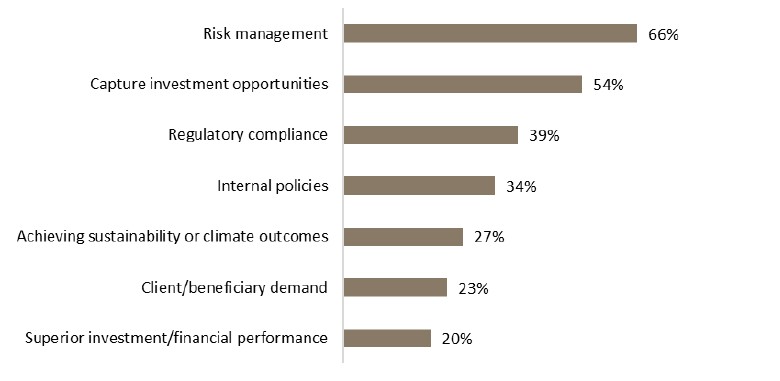
In terms of sustainable investment factors, risk management (60%), investment return (54%), and regulatory requirements (39%) account for a relatively high proportion, indicating that investors regard sustainable risk as the core of fulfilling trustee responsibilities and ensuring long-term investment returns. In terms of investment returns, respondents believe that long-term sustainable investments (over 5 years) may yield higher returns, while short-term investments (1-2 years) may yield lower returns, as sustainable investments may incur higher compliance costs and market volatility in the short term.
To promote sustainable investment, ASIFMA recommends that asset owners and regulatory agencies:
- Improving ESG data quality: Developing sustainable data standards and developing sustainable financial classification systems.
- Strengthening regulatory support: Providing financial incentives to encourage the market to adopt sustainable investment.
- Increasing resource investment: Asset owners provide more internal resource allocation for external asset managers.
- Strengthening investor education: Popularizing the concept, methods, and importance of sustainable investment.
Reference:
Asian Asset Owners’ Perspectives towards Sustainable Investing